15. Atomic Structure
Atomic Structure
The building blocks behind how radiation interacts with matter.
Before we dive deeper into how radiation behaves, it’s important to understand atomic structure — the foundation of everything we study in radiation physics.
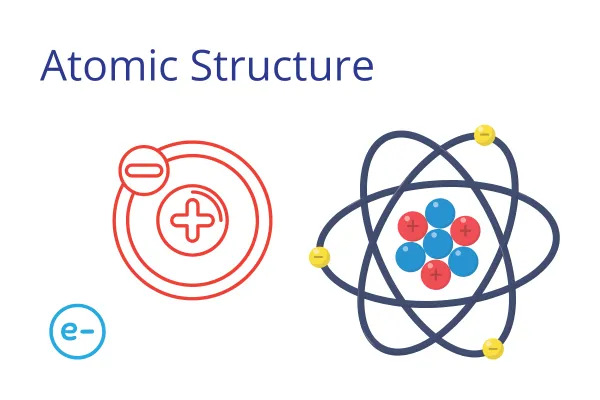
An atom is made up of three main parts:
- Protons, which are positively charged and found in the nucleus
- Neutrons, which have no charge and are also in the nucleus
- Electrons, which are negatively charged and orbit around the nucleus in different energy levels or shells
The number of protons determines the element (for example, hydrogen has 1 proton, oxygen has 8). The electrons balance the total charge of the nucleus, and their arrangement in shells affects how atoms interact with radiation.
The electrons closest to the nucleus are tightly bound, because they’re held strongly by the positive charge of the protons. The farther an electron is from the nucleus, the more loosely bound it becomes, meaning it takes less energy to remove it from the atom.
Think about playing with magnets that are attracted to each other — North and South. When they are close to each other, the pull is strong. When they are farther apart, the pull is weak. This is a great way to visualize and remember how electrons are held in an atom.
When radiation passes through matter, it can ionize atoms by knocking electrons out of their orbits. This process is the foundation of how radiation deposits energy in tissue, which is exactly what we use in radiation therapy.
In the next lesson, we’ll look at how radiation interacts with atoms, including photoelectric effect, Compton scattering, and pair production.
You’re doing brilliantly keeping up with these concepts — it’s all starting to come together now!
Warmly,
Sara
